


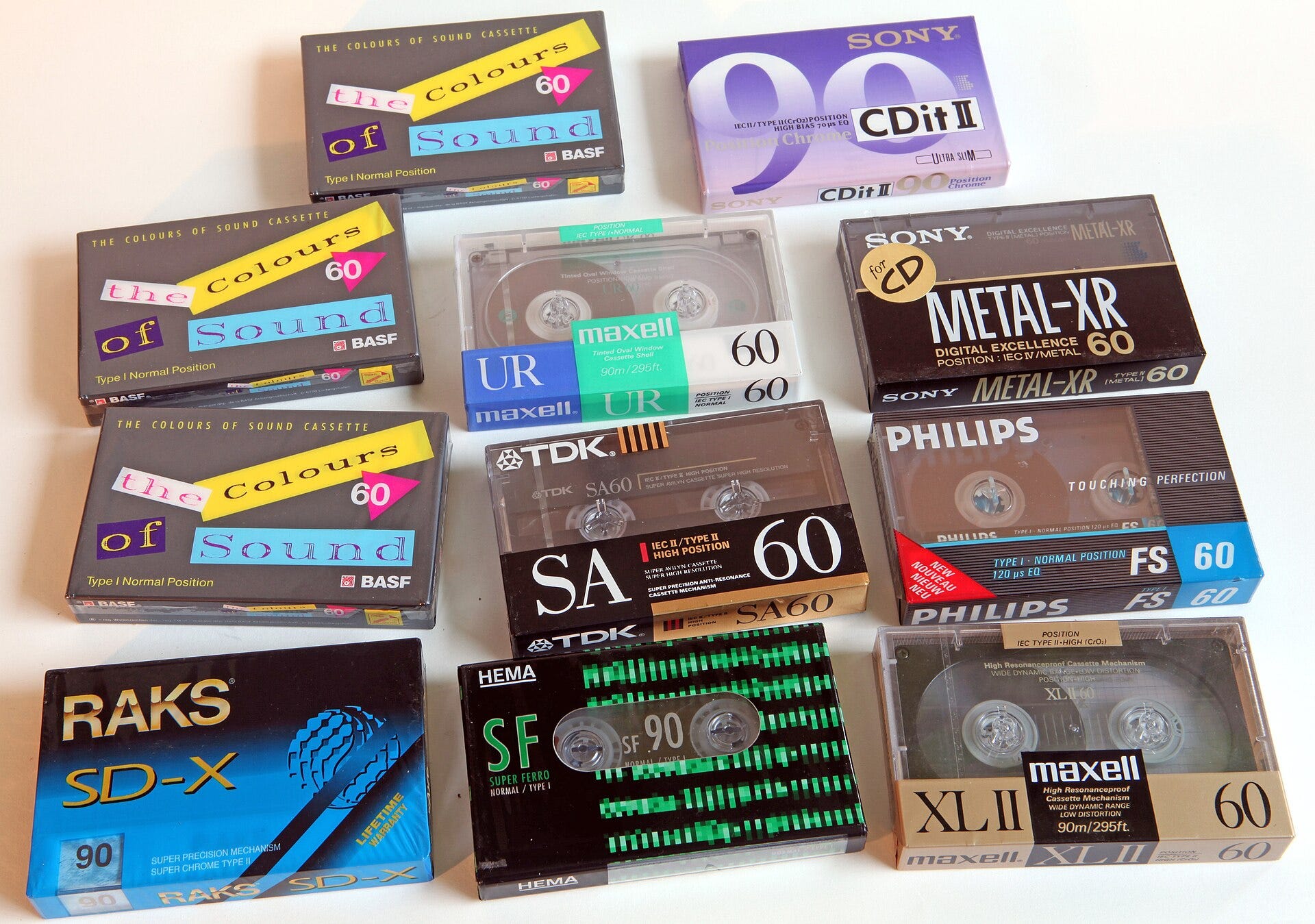
Before you recorded anything on it, a blank cassette already had quite a lot to say. About precision. About fidelity. About the sort of person who would definitely label both sides. This volume looks at the packaging that made ninety minutes of empty tape feel like an investment in the future.
A cassette sold several promises at once: better sound, more competent recording, and a small piece of personal identity. Its wrapper spoke like an engineer; its insert waited for your handwriting. Eventually, the same designs that once promised the future began selling the past.
At Philips in Hasselt, Belgium, Lou Ottens and his team worked on a smaller recorder and its accompanying cassette. The Philips Museum traces the development commission to 1961 and the invention to 1963. To establish the size, Ottens had a wooden block made that would fit inside his jacket pocket.
It is a lovely starting point for an object that would eventually accumulate so much futuristic language. A pocket. A block. Will it fit?
The block has not survived. The idea did rather better.
As you look through these examples, keep an eye on the different layers. The shell holds the tape. The case protects the shell. The folded insert gives you somewhere to write. The wrapper makes its pitch from the shop shelf.
A small vocabulary for looking properly.
The cassette shell contains the tape. The hinged storage case is a separate object. The folded J-card has a front, spine, and flap; the retail wrapper may carry graphics that disappear when opened. An O-card is an open-ended cardboard sleeve.
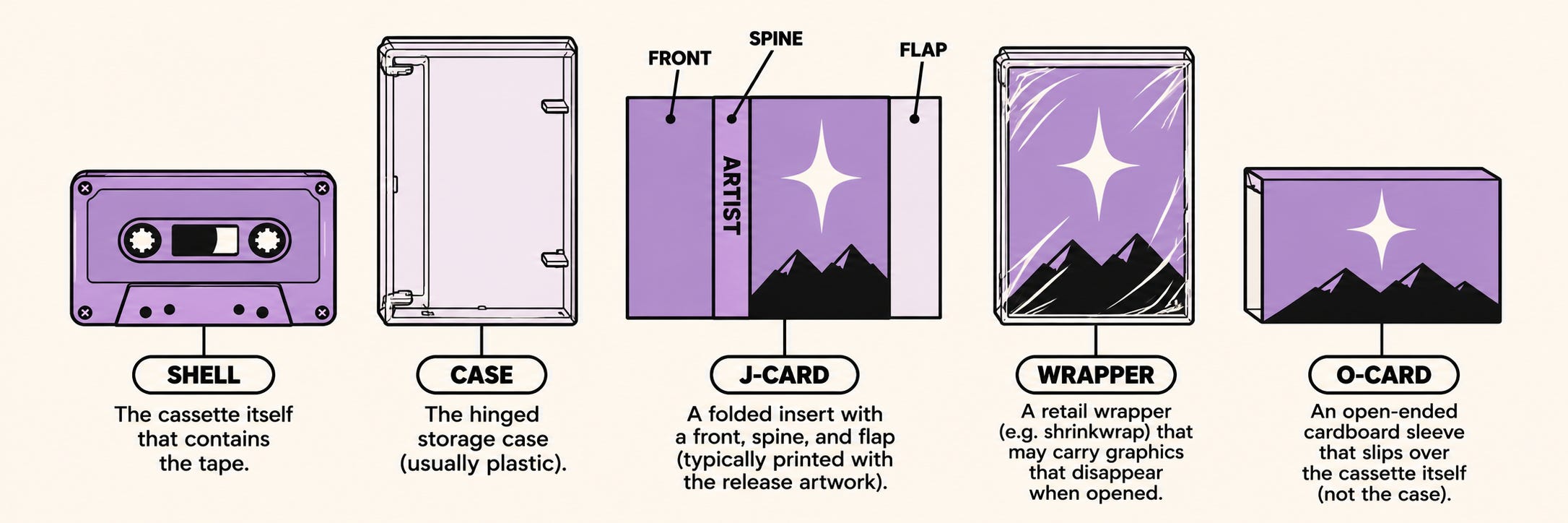
These distinctions matter when crediting a designer: designing a shell is not automatically designing the artwork surrounding it. More information you can find here.
