


Something's stirring. October is here, which means Halloween, everyone's favourite holiday, is creeping closer, and your monthly dose of the bizarre and delightful in creative culture, design oddities and internet curiosities has risen from the inbox once more. Pour yourself a coffee, light a candle if you're feeling dramatic, and come in. We've left the door open.
Every time we invent a new way to record the world, someone immediately uses it to record a ghost.
Sometime in the 1860s, a photographer worked out that a slightly overexposed plate could turn a pale blur into a dead aunt, and grieving families paid well for it. Then people sat alone with tape recorders, listening to the hiss until it said their name. VHS gave something physical: a plastic brick in a drawer that nobody remembered recording.
The internet, of course, made the drawer infinite. Creepypasta, Slender Man, Hat Man, Mothman, Skinwalker Ranch, SCP, all stitched together from grainy JPEGs, low-res videos and forum threads that stop mid-sentence.
Film has been telling the same story all along. In Poltergeist, the static talks back. In The Ring, you watch a tape and get seven days. Blair Witch looks like your cousin’s holiday footage, until it doesn’t. Paranormal Activity needed nothing but a tripod and a door that moves an inch at 3:14 a.m (which, if you think about it, is a brilliant idea). And sometimes the machine is in charge. HAL 9000 apologises politely while refusing to open the pod bay doors. The computers in Alien just update the screen. Using language as dry as it can be.
MOTION DETECTED.
UNKNOWN DEVICE CONNECTED.
The computer is never scared enough.
So this month’s Dispatch asks why PS1 fog beats a Marvel budget, why a timestamp makes everything look like evidence, why we’re suddenly asking whether anyone on the internet is actually real, and how technology became one of horror’s most reliable ways of making us doubt our own eyes.

Low Poly, High Horror
Your guide for this part is Kris Rants, our resident space cadet and game nerd, beamed in specially for the occasion.
At the dawn of the 3D computer age horror games came into their own by weaponizing the most terrifying thing in existence - your own imagination. If you've ever woken up after a big night out and thought “What did I do?”, you know better than most what I mean.
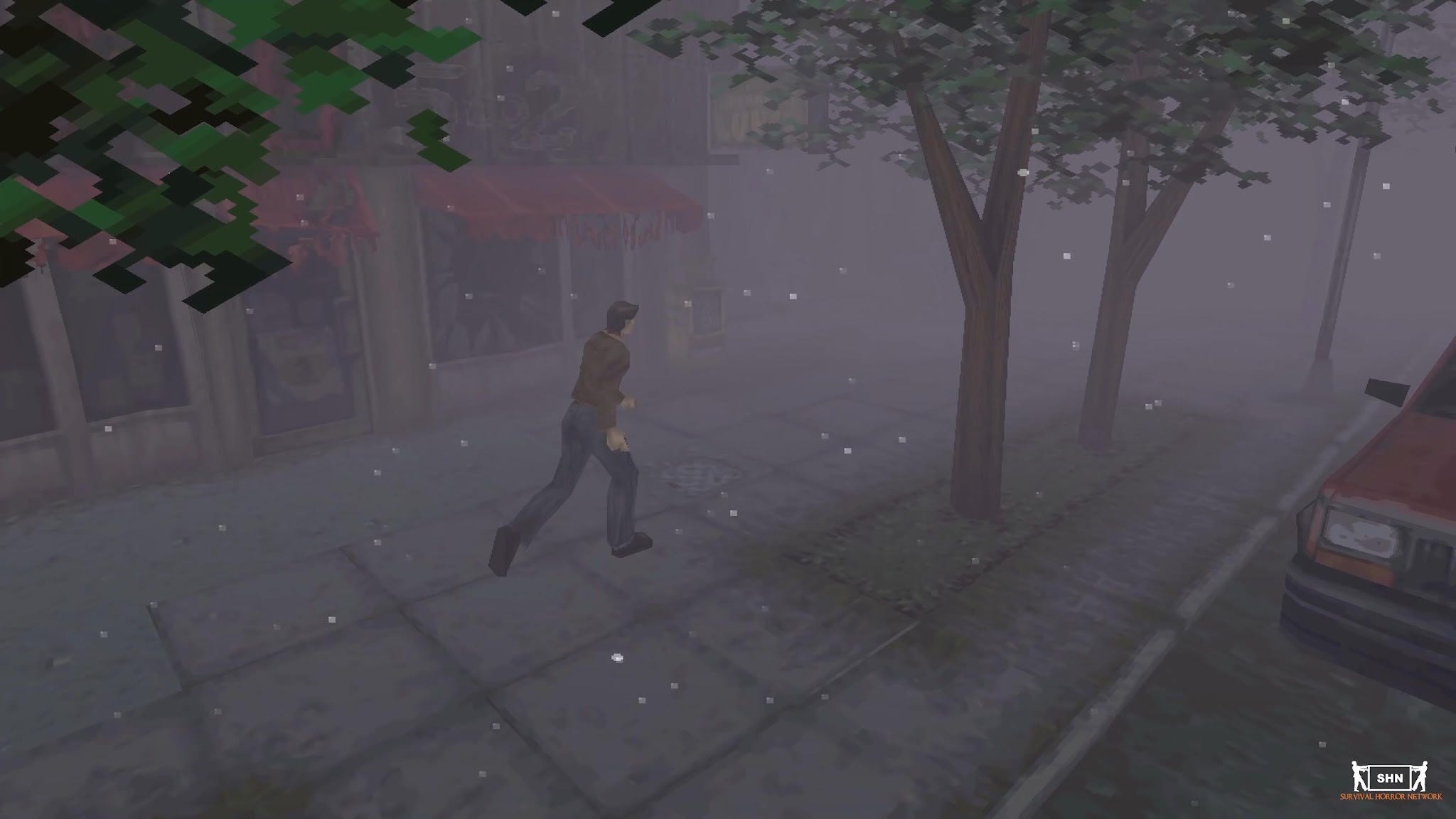
How did this work? The short answer is incomplete information - just like with your blackout drunk. Lower memory thresholds forced developers to show less on screen. This meant fog and darkness limiting how far you could see, low poly creations shifting in the distance, and forced camera perspectives that cut out half of your view. All of this your brain would then fill with the most horrible stuff imaginable keeping you on edge for the whole game. Add in reduced inventory space, limited ammo, and jump scares, and these games were guaranteed frighteners.
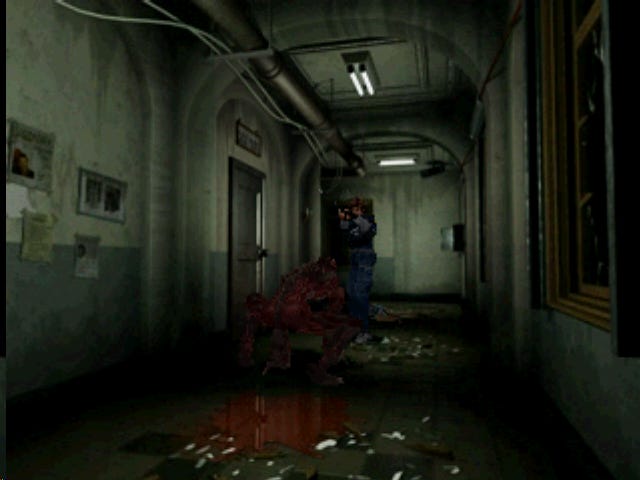
Why are developers doing this now despite technological advances? Because it works. Even when they could go photorealistic, many developers choose to go old-school.
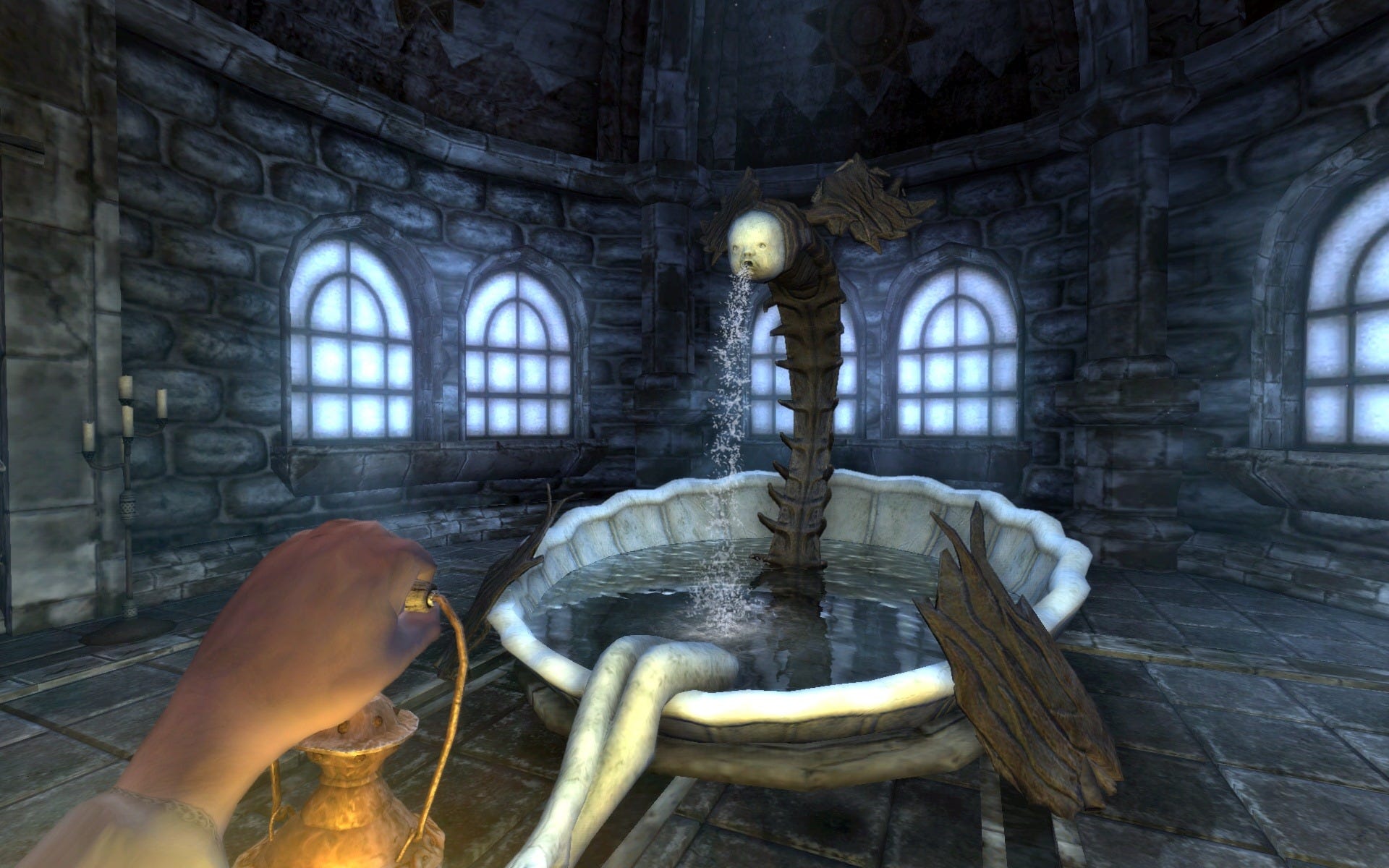
What now? Do yourself a favour and boot up a quality horror this October to scare yourself senseless. I’d recommend Amnesia: The Dark Descent, but it freaks me out too much and I don’t want to be responsible for any heart attacks…

The Dead Internet Is Doing Great, Thanks
Somewhere around 2019, a rumour started going round that the internet had died. Not crashed. Died, the way a town dies: lights still on, shops still open, nobody really living there anymore. Maybe a bit like the town from the movie FROM.
The Dead Internet Theory goes like this. Ekhheem:
At some point in the late 2010s, the web quietly stopped being people talking to people. In their place came bots, algorithms and manufactured engagement, all chattering away to one another in a loop, while the few humans left wandered through and pressed like.
For a while it was a lovely thing to believe at two in the morning. Then the internet rolled up its sleeves and started trying very hard to prove it right.
Scroll for long enough and you’ll feel it. You search for a recipe and get nine hundred words about someone’s grandmother before the ingredients and steps appear, written by a grandmother who never existed. Under it, forty comments say “Made this last night, so good!” in exactly the same voice. Somewhere in there, maybe, is one person who actually owns a pan. Eerily familiar, isn’t it?
Ask people on Reddit about it and they keep landing in the same place. It isn’t that everything is a bot. It’s that the internet feels hollow. One commenter put it bluntly: “No meaning, no soul, nothing.”
And here’s where the story takes a turn.
What if the machines didn’t make the internet robotic? What if we did?
We spent years practising. We learned which headlines get clicks, which comments get likes, which opinions farm replies, the exact second a video has to hook you. We mastered SEO, SEA, CTR, CPC, CPM, ROAS, CAC, LTV, KPIs, A/B testing, conversion funnels, retention curves, dwell time, engagement rates, content pillars, growth hacking, thought leadership and whatever the hell “thumb-stopping content” is.
Then the machines learned from us. As one Redditor put it:
“AI didn’t ruin the internet by faking human behaviour; it just easily copied us because human online culture became a predictable, repetitive script.”
So the real horror story is stranger and funnier than the original. Humans pretending to be algorithms. Algorithms pretending to be humans. Everyone squinting at everyone else, muttering bot.
The frightening part was never the big reveal, the curtain pulled back to show the server racks. It’s smaller and quieter. It’s opening a comment section and realising you simply can’t tell anymore.
And somewhere under all of it, a real human is still typing:
Great post! Thanks for sharing.
The Max Headroom Hijacking
November 22, 1987.
It’s a quiet Sunday night in Chicago. You’re watching Doctor Who on PBS, when suddenly - without any warning - the screen glitches out. Static. Distorted lines. Then, a man in a rubber Max Headroom mask appears. He’s babbling nonsense, swaying side to side in front of a moving metal background. No intro. No context.
And then it gets weird.
This wasn’t a prank video. This wasn’t an early YouTube stunt. This was real broadcast signal hijacking - live, unfiltered, and still completely unsolved 35+ years later.
This one's been living rent-free in our heads for a while. We went deep on it already, so catch up here:

Forward This Before Midnight
In 1795, a “Letter from Heaven” promised blessings to people who passed its message on. Those who refused were threatened with plagues upon themselves, their children and their cattle. It was one of the religious predecessors of the chain letter and it had considered your entire household. Even the cows. The Smithsonian’s history of chain letters is full of these arrangements.

By the late 1990s, the chain letter had settled into the inbox and developed a surprisingly varied offering. You could become rich, lose your account, acquire terrible luck or help with somebody’s alleged school project. Quite a lot riding on whether you pressed Forward.
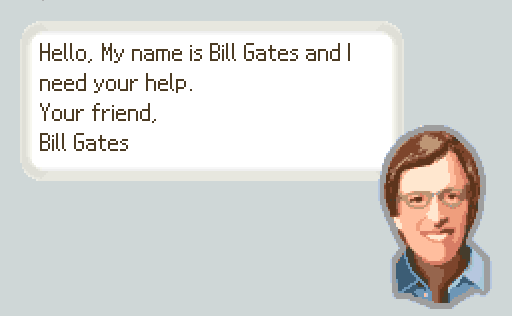
The Bill Gates email hoax promised money for passing a message around, supposedly as part of a Microsoft email test. Elsewhere, “Tara and John”, the alleged directors of MSN, warned that accounts would disappear unless users forwarded their message. One version claimed there were only 578 account names left. Apparently the internet was nearly full.
This is the original Bill Gates email:
Hello everybody,

My name is Bill Gates.

I have just written up an e-mail tracing program that traces
everyone to whom this message is forwarded.
I am experimenting with this and I need your help.
Forward this to everyone you know and if it reaches
1000 people everyone on the list will receive $1,000 at my expense.

Enjoy.

Your friend,
Bill Gates
These messages arrived through people you actually knew. Someone from school. A colleague. A relative suddenly involved in distributing Bill Gates’s fortune. The sender was usually someone you liked, which raised questions about their approach to friendship.
Eventually the forwards spilled into MySpace bulletins, YouTube comments and Facebook messages. You could scroll down to discuss a music video and discover that your survival now depended on reposting a paragraph about a dead girl.
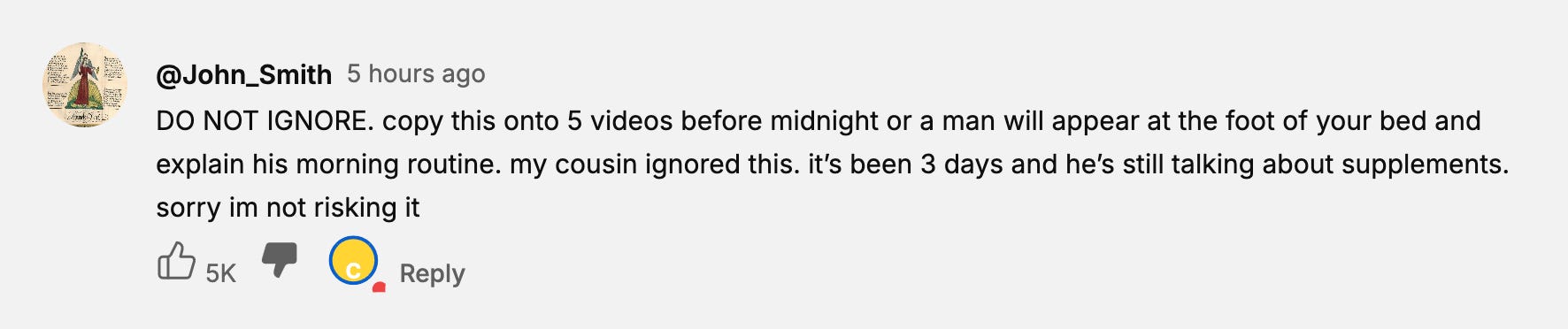
You knew the drill: pass it on and something good might happen; ignore it and something awful would.
One chain told the fictional story of Carmen Winstead, a teenager pushed into a sewer by schoolmates who covered up her death. Then it introduced another supposed victim: a boy who read her story, failed to pass it on and met a gruesome end himself. The warning to the next reader was clear. Share it, or she would come for you too. The story was a hoax.
Reading the chain mail made you responsible for what happened next. You didn’t have to believe it. Forwarding it was less effort than finding out.
Five seconds of embarrassment in exchange for not considering the bathroom a crime scene tonight. Sorry, everyone. Just in case.
Sorry for the Inconvenience
“An unknown error has occurred” is a remarkable thing to hear from the only object in the room that might know what happened. You were just downloading something on LimeWire. Suddenly you’re being asked to interpret a code, contact an administrator who is apparently you, or lose everything you hadn’t saved.
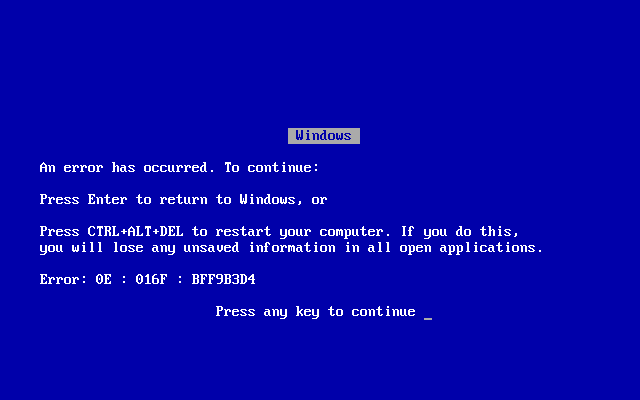
You could recognise the Blue Screen of Death from across the room. Your stomach dropped before you’d read a word. You stopped clicking, started bargaining, promised to save more often if the machine would just come back this once. Occasionally it did, and you immediately forgot everything you’d promised.
Mac users know the little rainbow wheel. You move the cursor away from the window, then back again, checking whether it’s still there. It is. You leave the computer alone for a minute, because perhaps you’ve been putting it under too much pressure.
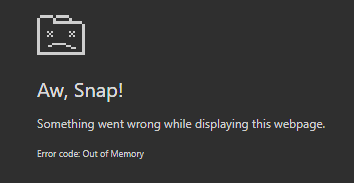
Chrome’s “Aw, Snap!” is almost worse in its cheerfulness. You’re trying to submit something important and the browser is talking like it’s dropped a biscuit. Lose your connection altogether and there’s a little dinosaur to keep you occupied. Fine. You’ll jump over the cactus. But you’re still angry.
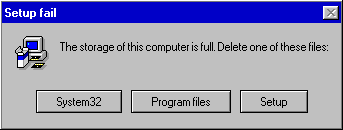
Bad error messages will interrupt you (and ruin your day), demand your attention and give you very little to work with. “Something went wrong.” We had established that. “Try again later.” A timescale would be lovely. You’re dependent on the machine to explain its failure and it has decided to be vague.
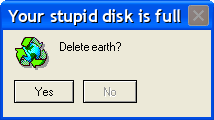
Eventually, people started making their own error messages. The fake warnings became little souvenirs of everything a computer had ever put us through. Some were barely an exaggeration.
We’ve learned what those colours, sounds and little grey boxes can cost us. An error message interrupts whatever we thought was safely happening and makes us question it: did that save? Did that send? Is the file still there?
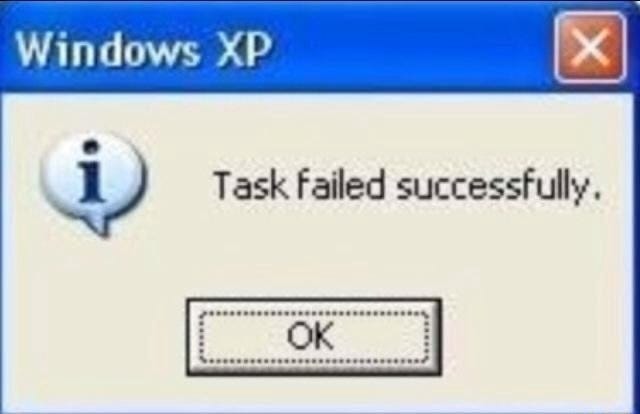
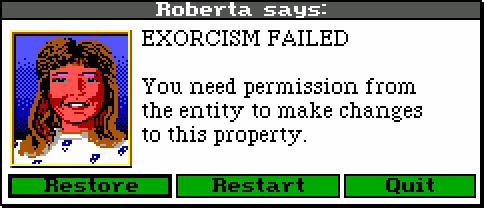
If you’d like to deliver some bad news yourself, Alice Averlong’s Death Generator lets you put your words into old game screens and computer interfaces. We can’t promise technical support, but we would like to see your results.
End of Transmission
Kris Rants has entered the chat again.
And so we’ve reached the end. Not of Earth - not yet. Give that a few decades. Not the end of Halloween, that hasn’t even started. I’d know because I wouldn’t be writing this, I’d be in a diabetic coma.
No, we’ve reached the end of the dispatch. I hope you’ve learned something. I think I did, but I’m still obsessing over chain mail vs chainmail. Thank you for making it this far. And if you skipped all the way to the end instead of reading everything, then you won’t even get my earlier references and your life will be forever shallower.
Love you all. We’ll be back in some amount of time - I don’t really know when though since I don’t actually write or plan this.
Peace out, space cadets!
The Orbit
P.S. If you lit that candle at the beginning, this is your reminder to blow it out.
thank youuu for the restack 🫶🏼 ✨