

Hello!

We’re back with another monthly bundle of strange ideas, beautiful nonsense, design detours, and internet artifacts that probably should not exist—but thankfully do.
In this issue:
🌟 Fresh Orbit: Creative News & Quick Takes
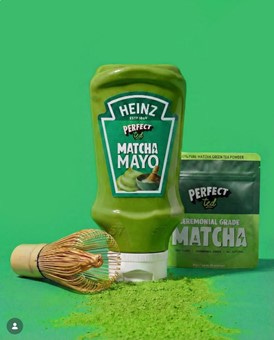
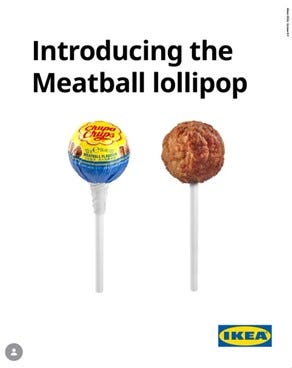
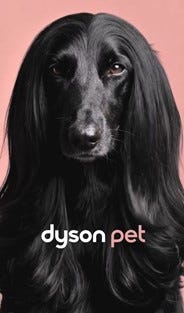
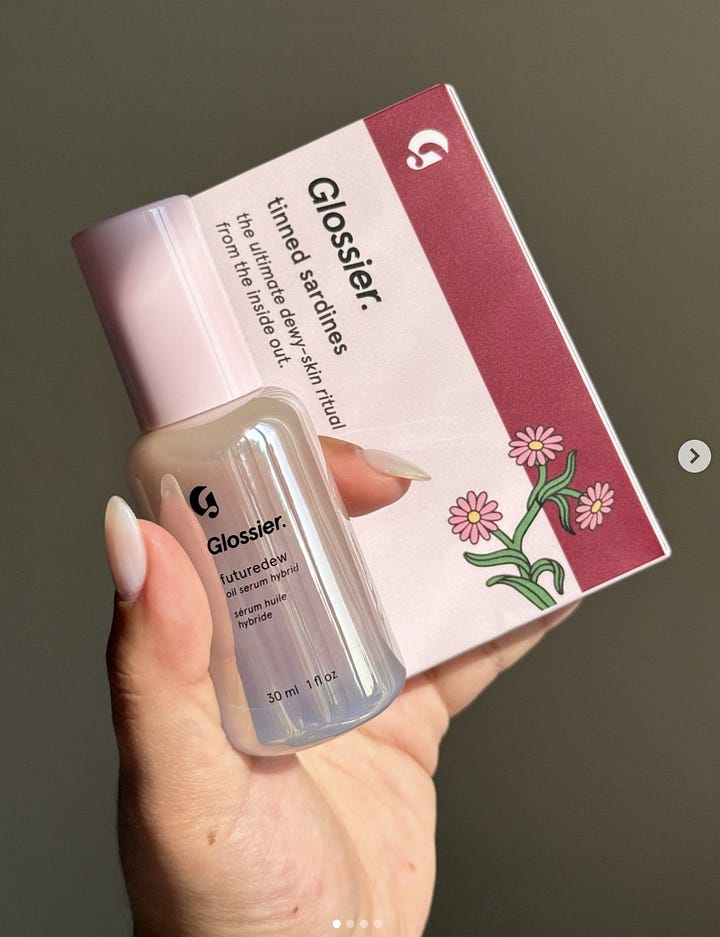
On April 1, 2026, brands didn’t just make silly pranks—they moved fast, jumped on trends, and used the day to test ideas in public. The best campaigns felt less like jokes and more like smart little experiments: part product tease, part cultural wink, part “wait… would people actually buy this?”
Baskin-Robbins’ “Ice Cream Soup” worked because canned, ready-to-eat dessert sounds ridiculous — but also weirdly convenient. And Top Ramen Butterfinger hit the same sweet spot: salty, sweet, cursed, and somehow believable enough that people actually argued over whether they’d try it.
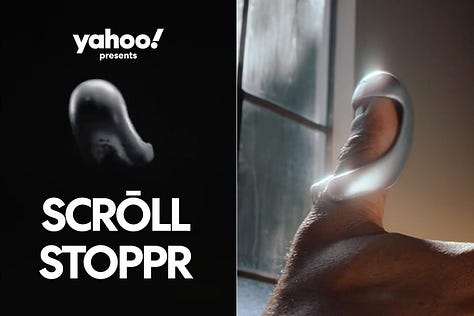
Yahoo’s “The Scrōll Stoppr” was a very funny, very self-aware bit of marketing: a tiny weighted thumb ring designed to stop you from scrolling. The joke worked because Yahoo actually sold it for $4.99 on TikTok Shop—using the endless-scroll machine to sell a product that supposedly protects you from endless scrolling. Part useful, part ridiculous, part “we are all trapped here together.”
After 144 years, Barcelona’s Sagrada Família is finally heading toward its grand finale. In June 2026, the basilica is set to receive its final giant spire: the 172-meter Tower of Jesus Christ. That means Gaudí’s famously unfinished masterpiece is getting very close to actually being… finished. Less “construction site with a gift shop,” more “centuries-long architectural side quest completed.”
Logo trend: ‘Imperfect by Design’—Designers spent April waving goodbye to plastic-perfect AI gloss. Hand-drawn type, wonky lines and frosted glass packaging from indie beauty brand Radford were everywhere—basically Comic Sans for grown-ups with a budget. Source: Canva Newsroom — Imperfect by Design
The Most Interesting Man returns — Dos Equis brought back its iconic ‘Most Interesting Man in the World’ to recruit a Gen Z successor. He is older, the lighting is moodier, and the bar setup is now extremely Letterboxd-coded.
Cannes Lions added a Creative Brand Lion and AI Craft — The 2026 Cannes Lions, set for June 22–26, announced new categories: a Creative Brand Lion for brands building creative cultures, and AI Craft sub-categories celebrating work made by humans + AI together (instead of either alone).
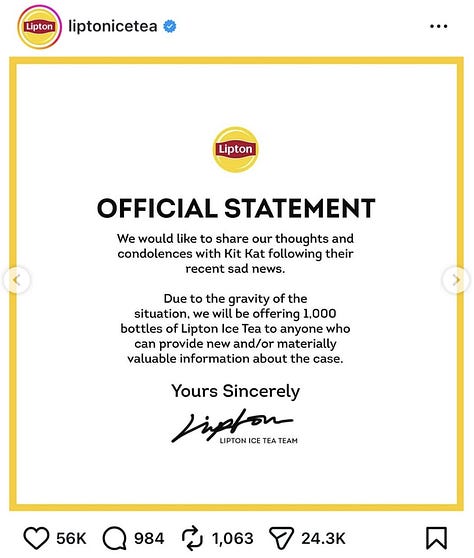
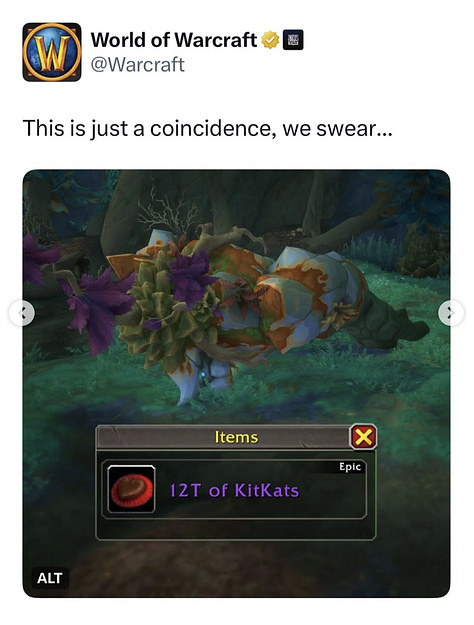
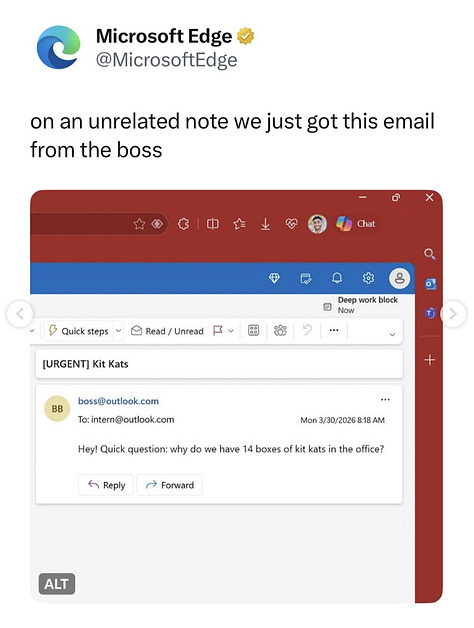
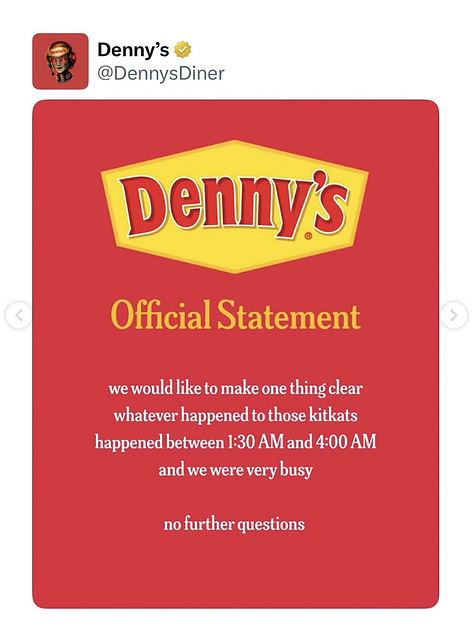
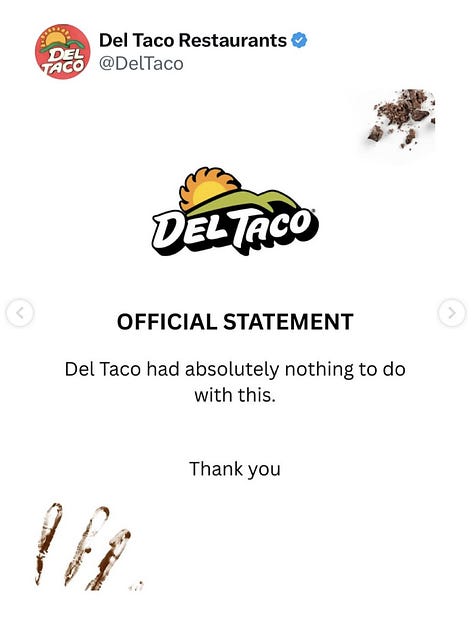
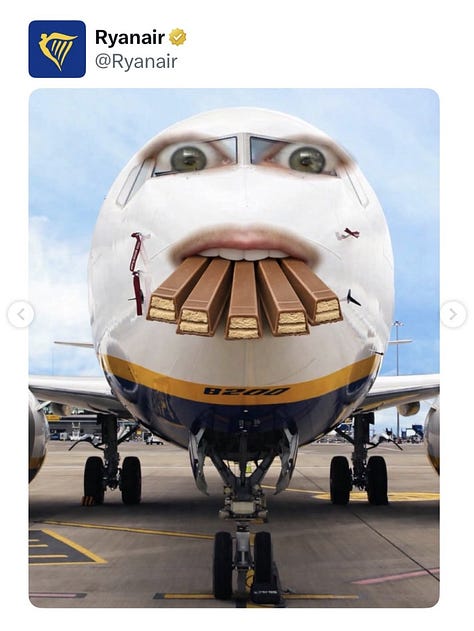
The Great KitKat Heist became a meme economy — After a real-life robbery in which 400,000+ KitKat bars were stolen during transport across Europe, the internet immediately christened it ‘the chocolatiest crime’ and pumped out a fresh batch of heist memes for two solid weeks.
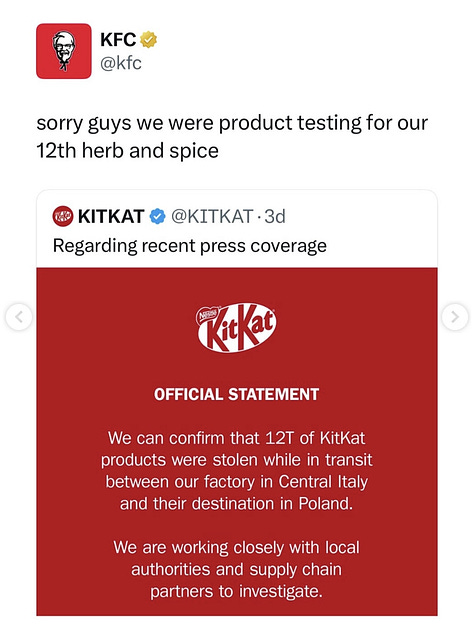
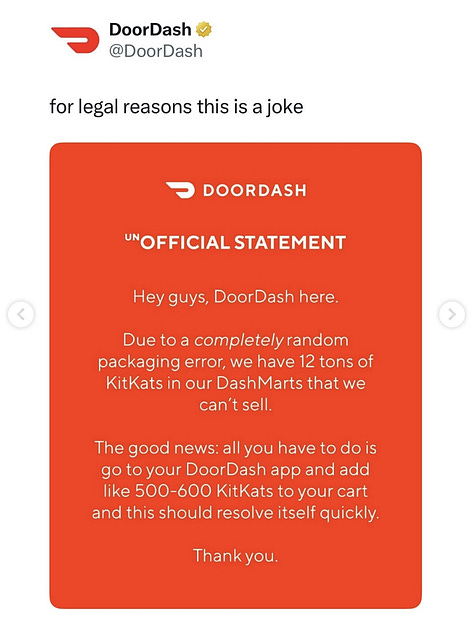
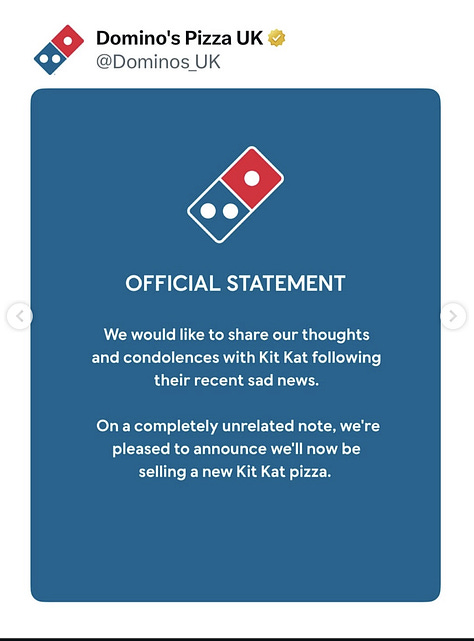
The Nihilistic Penguin meme conquered brand Twitter — Within days of going viral, the Nihilistic Penguin (a sad CGI penguin sighing about everything) was running BMW and Lidl posts. Brands love a penguin who’s Going Through It.
‘2026 is the new 2016’ became a whole movement — TikTok decided the vibes had returned — side parts, skinny jeans, indie sleaze, Snapchat dog filter, early Lana Del Rey moodboards. Search volume for #2010s tumblr jumped 364% YoY. Tumblr was vibrating in its grave.
AI scanned 400,000 Reddit posts to find drug side effects — Researchers at Penn ran an AI through 400,000 Reddit posts to surface unreported side effects of GLP-1 weight loss drugs. Reddit, against everyone’s bets, turned out to be a serious medical archive. Source: Penn Today — GLP-1 + Reddit
Y2K is officially mainstream now — Low-rise jeans, butterfly clips, baby tees, mini skirts, platform shoes, chunky sneakers—Y2K isn’t just a TikTok bit anymore. Victoria’s Secret announced two new Brisbane stores partly to ride the demand. Source: Fashion Week Online — Y2K 2026
Flip phones are surging again — By April 2026, basic flip phones were having a real second wind—Motorola Razr 60 Ultra topped reviews, Nokia kept relaunching classics, and 18- to 25-year-olds were buying them in serious numbers, citing screen-time fatigue and a desire to look cool while ignoring texts.
The Louvre is still missing its Crown Jewels — The October 2025 heist that snatched 8 pieces of the French Crown Jewels (~€88M) in under 8 minutes is still unresolved by April 2026. The thieves were caught; the jewels were not. The Louvre even started a bidding process to restore Empress Eugénie’s Crown, which was dropped during the heist.
Cyberdecks are having a moment — DIY portable computers built from Raspberry Pis, repurposed makeup caboodles, and whatever else looks like it could survive both a LAN party and the end of civilization. Part craft project, part anti-minimalist rebellion, part tiny protest against AI-smooth tech sameness. We went deeper on this one below.


📸 Visual Inspiration & Oddities
“Under Construction” GIFs as an aesthetic movement.
“Under construction” GIFs began as practical little warnings on 1990s homepages: this page is not done yet, please enjoy this tiny man digging forever. But over time, the cones, barricades, flashing signs, and pixel workers became more than web clutter. They turned into one of the clearest symbols of the old internet: messy, personal, always unfinished, and proudly DIY.
Today, designers mostly avoid them professionally, because nothing says “this site may never launch” like a looping construction worker from 1998. But in art, nostalgia, and indie web culture, they live on as perfect icons of Web 1.0 energy.


👾 Culture Glitch: Cyberdecks are back!
The laptop is boring now, apparently, so people are building cyberdecks: DIY portable computers made from Raspberry Pis, tiny screens, keyboards, batteries, 3D-printed shells, old cases, makeup caboodles, clamshell purses, and whatever else looks like it could survive both a LAN party and the end of civilization. The idea goes back to William Gibson’s Neuromancer and classic cyberpunk hacker fantasies, but the 2026 version is less “man in tactical vest preparing for the grid to collapse” and more “what if my computer looked like a cursed Polly Pocket with Linux?” It’s part craft project, part anti-minimalist rebellion, part tiny protest against AI-smooth tech sameness. A reminder that the future used to be something you could open, solder, decorate, ruin, and make completely yours.


📺 Weird TV Moments: Geraldo Opens Al Capone’s Vault, 1986
On April 21, 1986, Geraldo Rivera hosted the live two-hour TV special The Mystery of Al Capone’s Vaults, filmed beneath Chicago’s abandoned Lexington Hotel, where Capone had once operated. The broadcast hyped the possibility of hidden money, weapons, documents, or even human remains, and around 30 million viewers tuned in. After crews broke through the sealed chamber, they found no treasure or bodies — only debris, dirt, and a few old bottles. The special became a national punchline, but it was also a ratings success, turning an empty room into one of TV’s most famous failed reveals.
🔗 Curated Links: Oddities & Inspirations
Noware’s PUFF Flash Drive


A designer flash drive. A phrase that should not work, and yet here we are. Noware’s PUFF is a wearable USB drive with a tiny screen and reactive animations. It can be worn as a pendant, bag charm, or keychain, because apparently external storage is ready for its comeback era.
After years of everything disappearing into clouds, subscriptions and invisible sync, there is something strangely satisfying about a tiny, physical object that says: Your files live here.
Is it necessary? Absolutely not.
Does it come with a hefty price tag? Obviously.
Digital Graffiti for the E-Ink Shelf Tag Era
Arthur Bouffard (@arthurbfrd) shared his experimental usage of a Flipper Zero-style pentesting Device to rewrite electronic shelf labels in a grocery store. Not to change the price — the video very clearly warns that doing that is illegal — but to show how some e-ink retail tags can be modified for “educational and research purposes.”
Which is exactly the kind of sentence that sounds like it was written five minutes before a mall security guard arrived.
Retail infrastructure becoming a canvas. The supermarket shelf as a low-resolution message board.
🔗 More of the Creator www.arthurbouffard.com
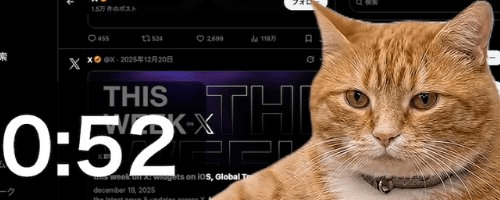
Cat Gatekeeper: The Internet’s Orange Warning Sign
Cat Gatekeeper is a browser extension that blocks your screen with an enormous orange cat once you’ve scrolled for too long. That’s the whole intervention: the cat arrives, the feed stops, you sit there with your choices.
Most screen-time tools feel like HR software for your soul. Cat Gatekeeper is better because it doesn’t moralize. It just puts a large digital animal in the way.
🔗Get your own Cat: Cat Gatekeeper


Your AI Slop Bores Me
Your AI Slop Bores Me is a real-time game where humans pretend to be AI. You submit a prompt, a stranger has a few seconds to answer like a chatbot, then you do the same for someone else.
The result is messy, fast, occasionally stupid, occasionally brilliant and much more alive than most “creative AI” demos. The name did half the work before anyone clicked.

Fructis Fans Links: A Hub Dedicated to The Art of Early Internet Design!
Fructis Fans Links is a retro web resource hub full of GIFs, blinkies, HTML guides and everything you need to bring the vibrant and quirky aesthetics of the early internet back to life.
The old web survives in places like this because someone loved something enough to collect it, organize it and keep it online.
🔗 fructisfans.neocities.org/Links
🎟️ Pop-Culture Artifact of the Month
Tux the Penguin (1996)
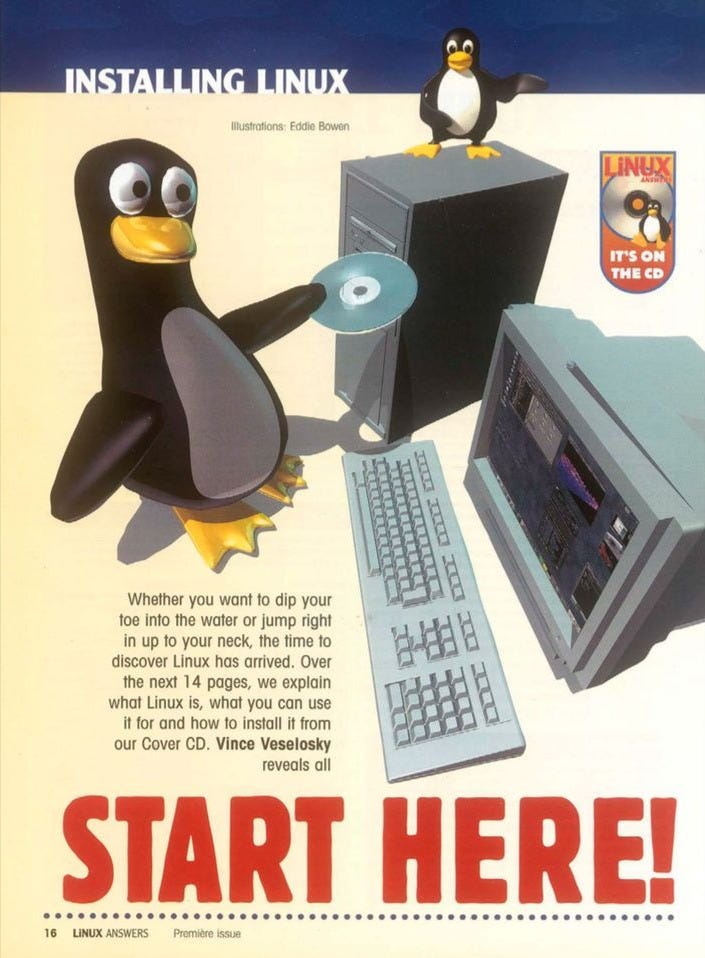
Before mascots were smoothed into brand-safe little blobs by product teams and stakeholder decks, there was Tux.
Tux is a penguin character and the official mascot of the Linux kernel. Linux could have given itself something serious. A chrome symbol. A cyber-animal. A logo that screamed “future infrastructure.” Instead, the open-source community chose a penguin who looks pleasantly full and vaguely pleased to be included.
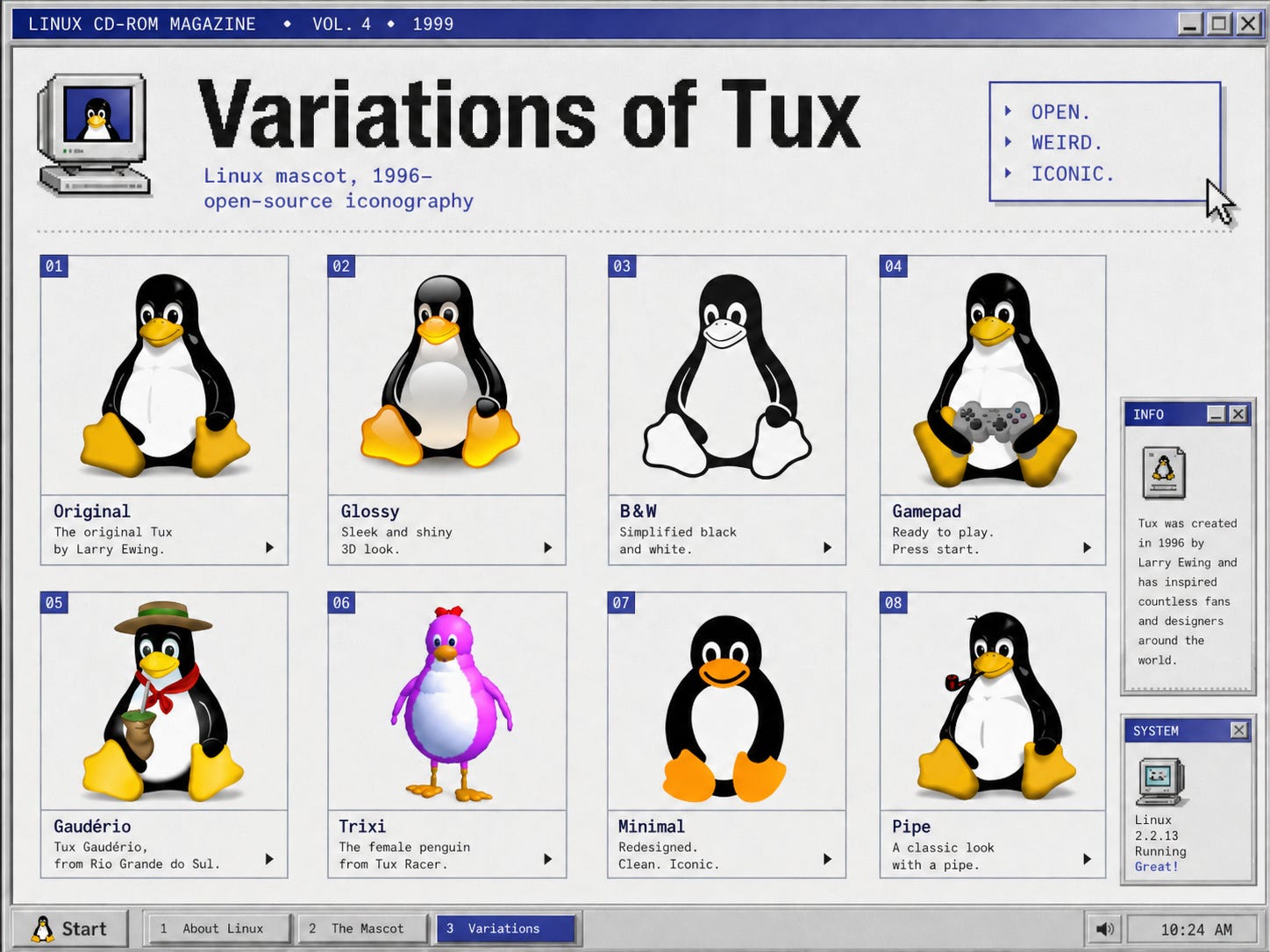
The idea of making Linux’s mascot a penguin came from Linux creator Linus Torvalds himself. Jeff Ayers later described Torvalds as having a soft spot for “flightless, fat waterfowl,” while Torvalds joked that he caught “penguinitis” after a small penguin nibbled him during a 1993 visit to the National Zoo & Aquarium in Canberra, Australia.
🤔 Poll of the Month
Thanks for reading!

You’ve unlocked Coupon #010. Keep collecting. There is no prize, only perspective.

Ah, so many retro vibes in this Dispatch. My vote is definitely for the 2000s. The most revolutionary decade, no doubt. 😊
hey do you guys use ai to write this? or is it written by a team